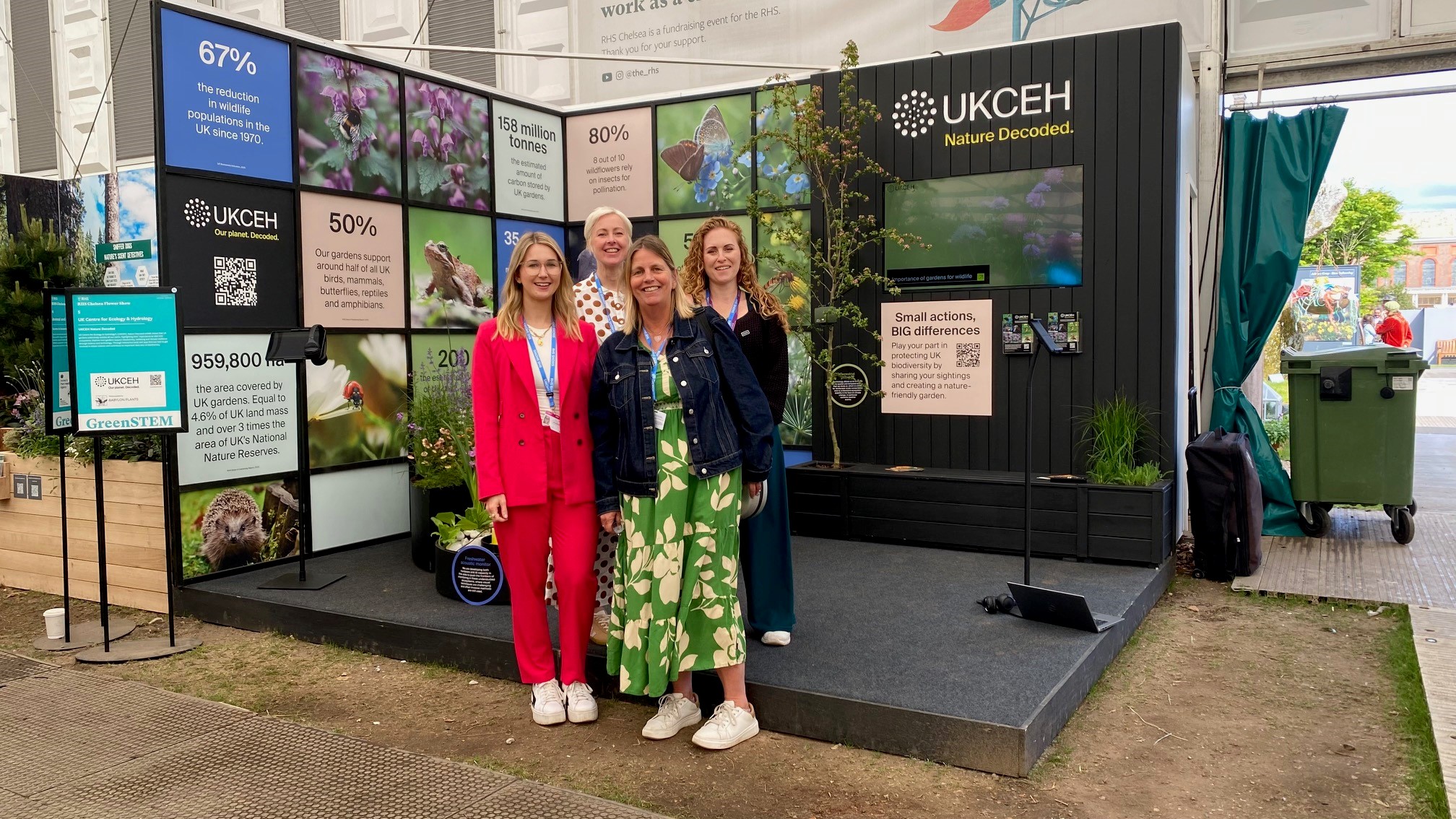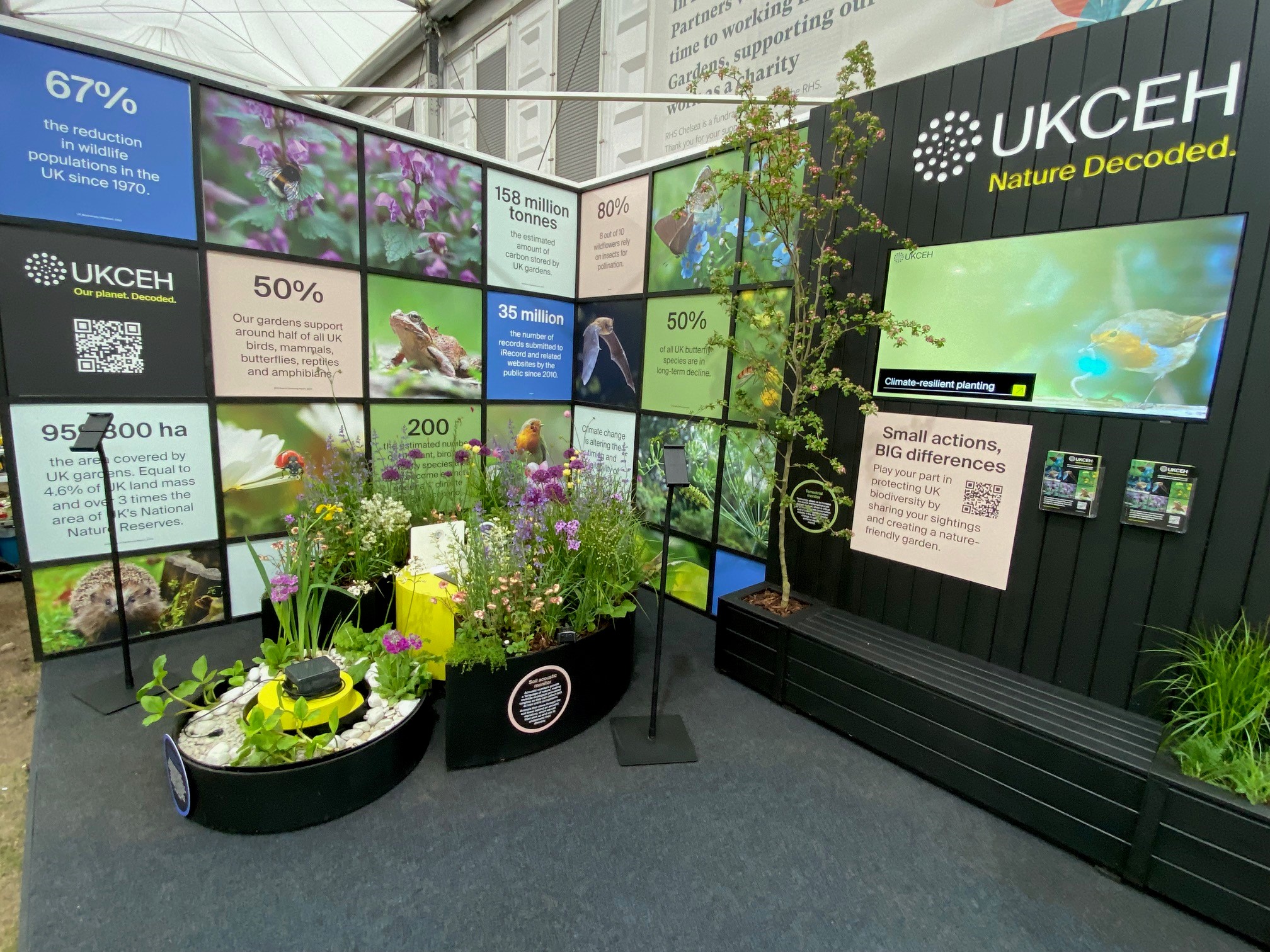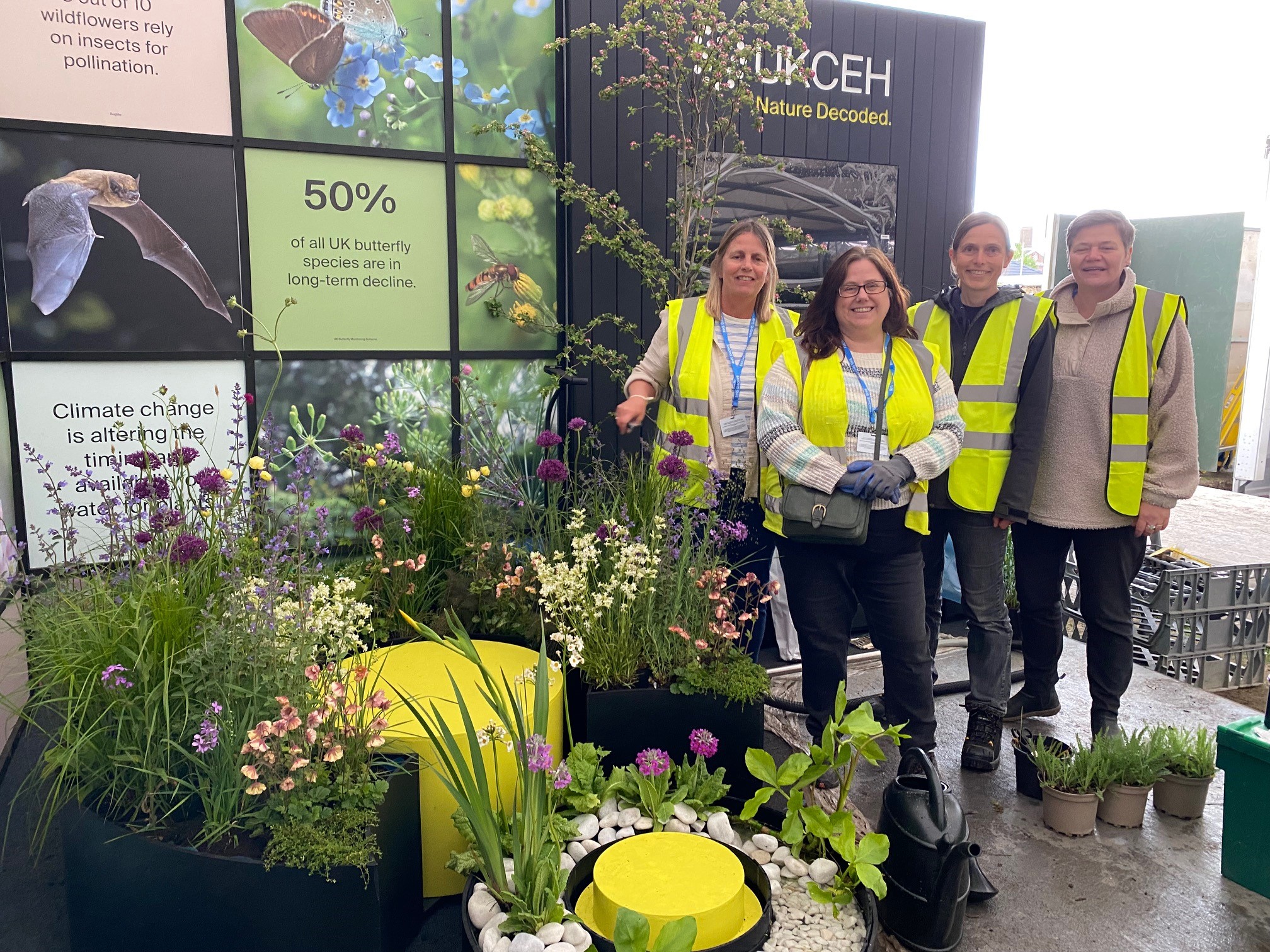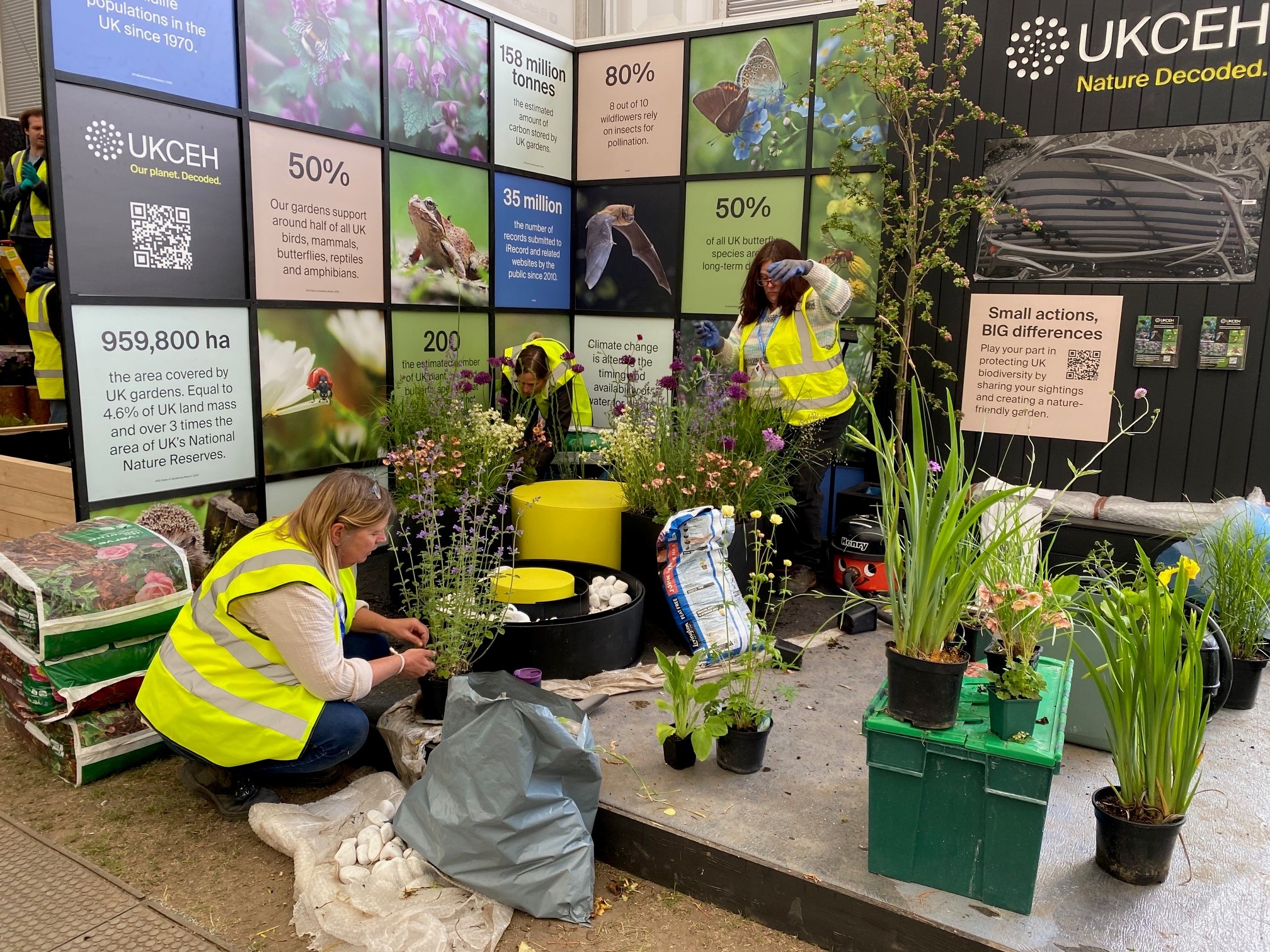
Our exhibit
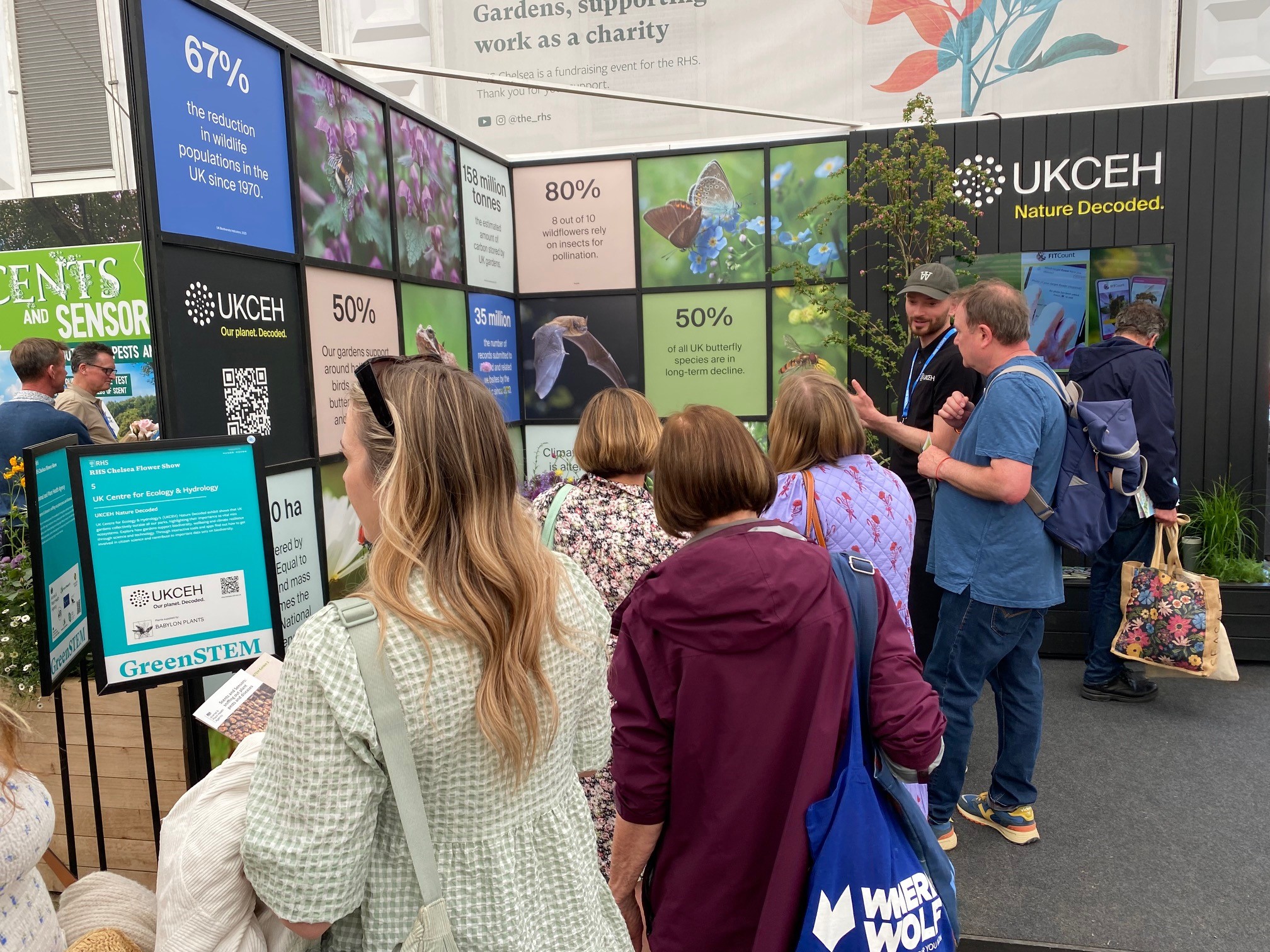
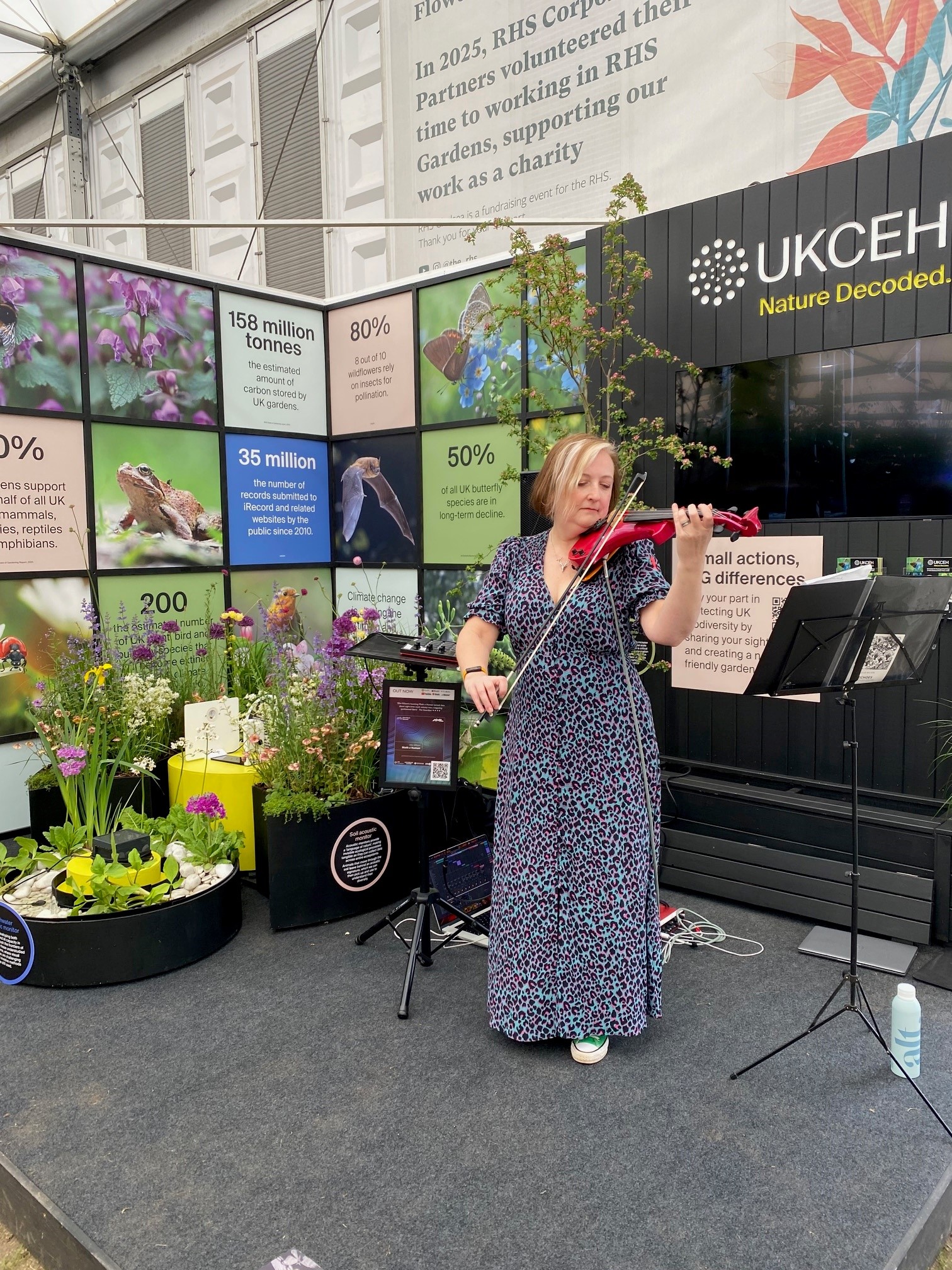
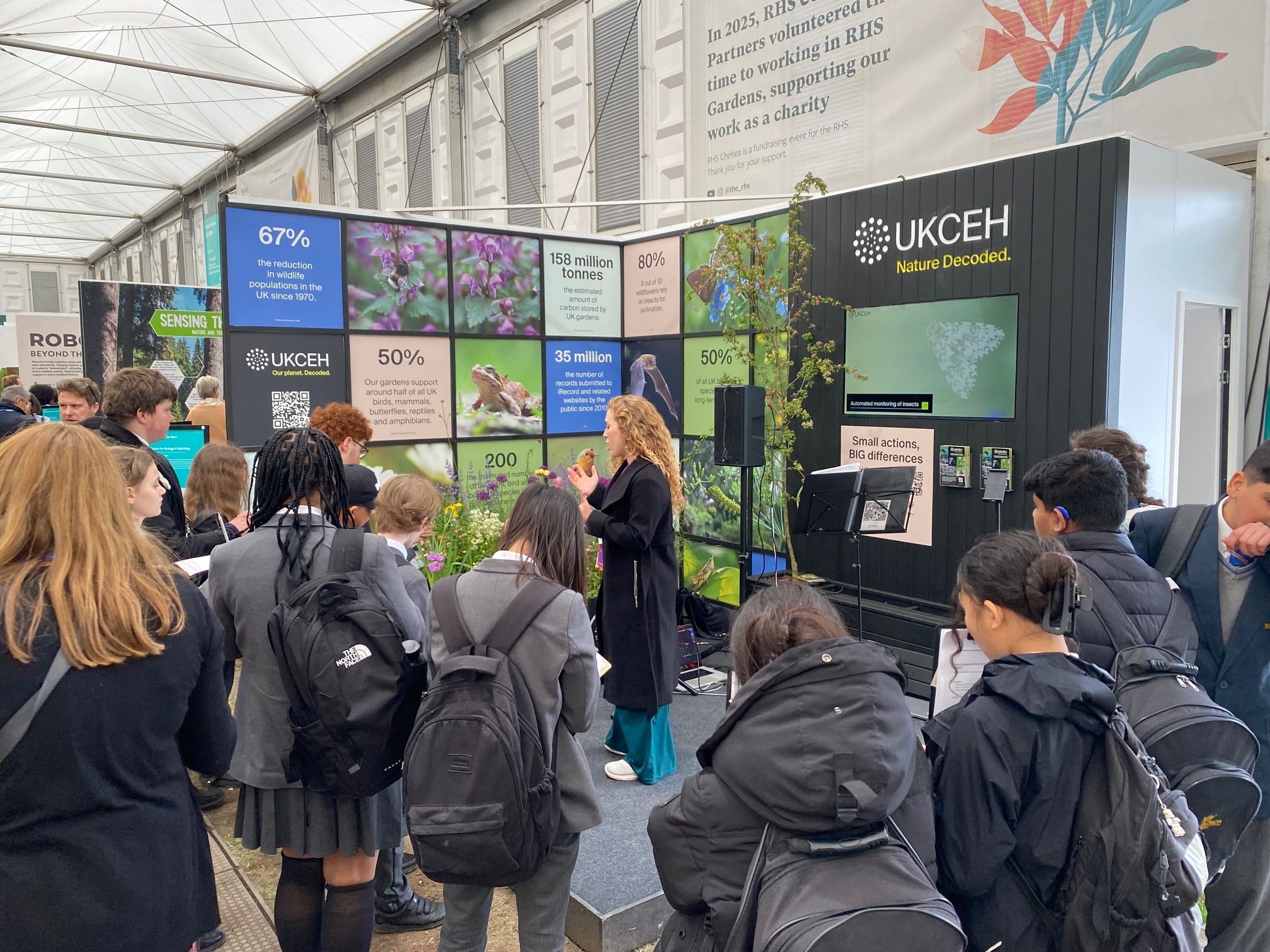
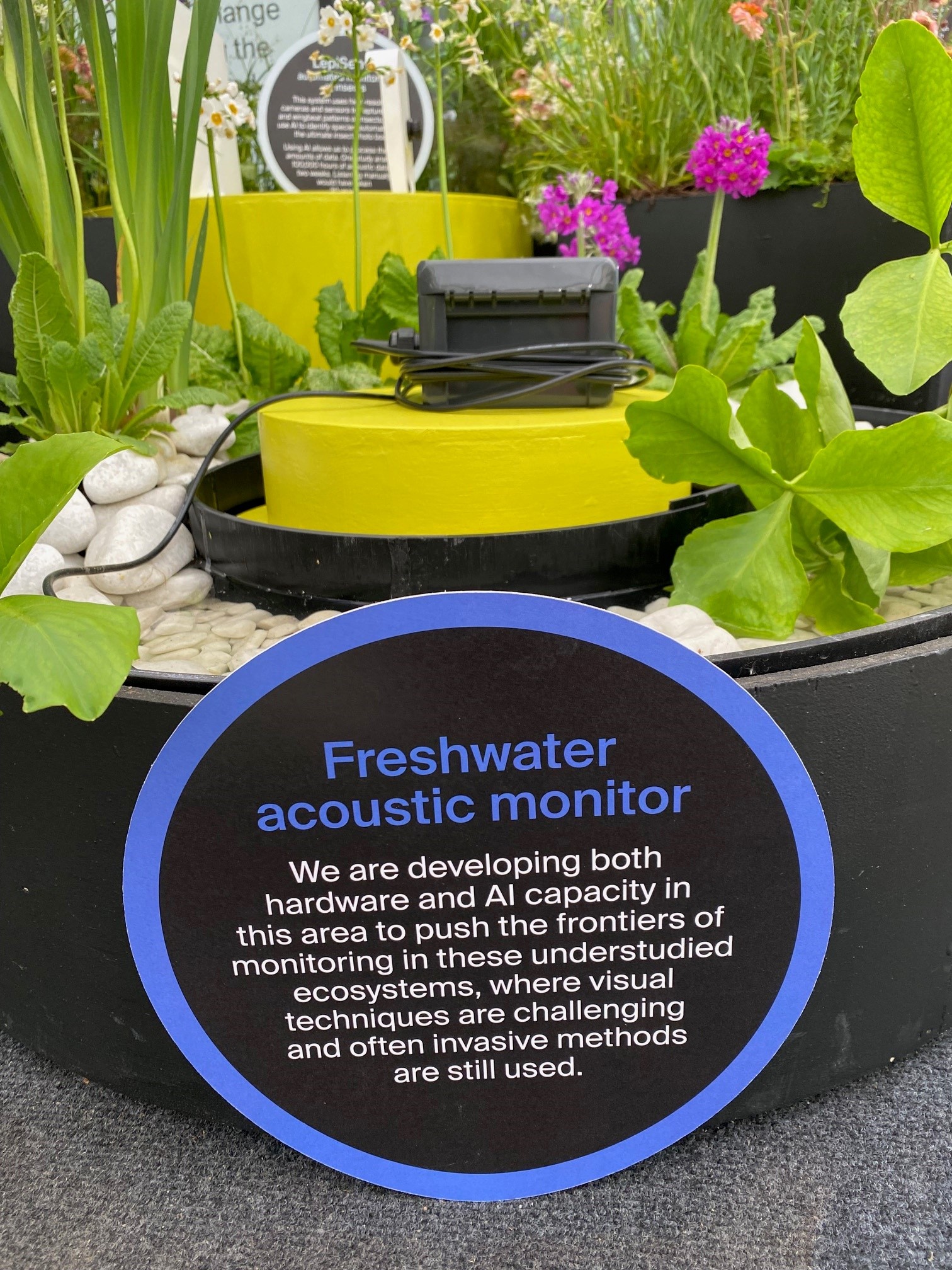
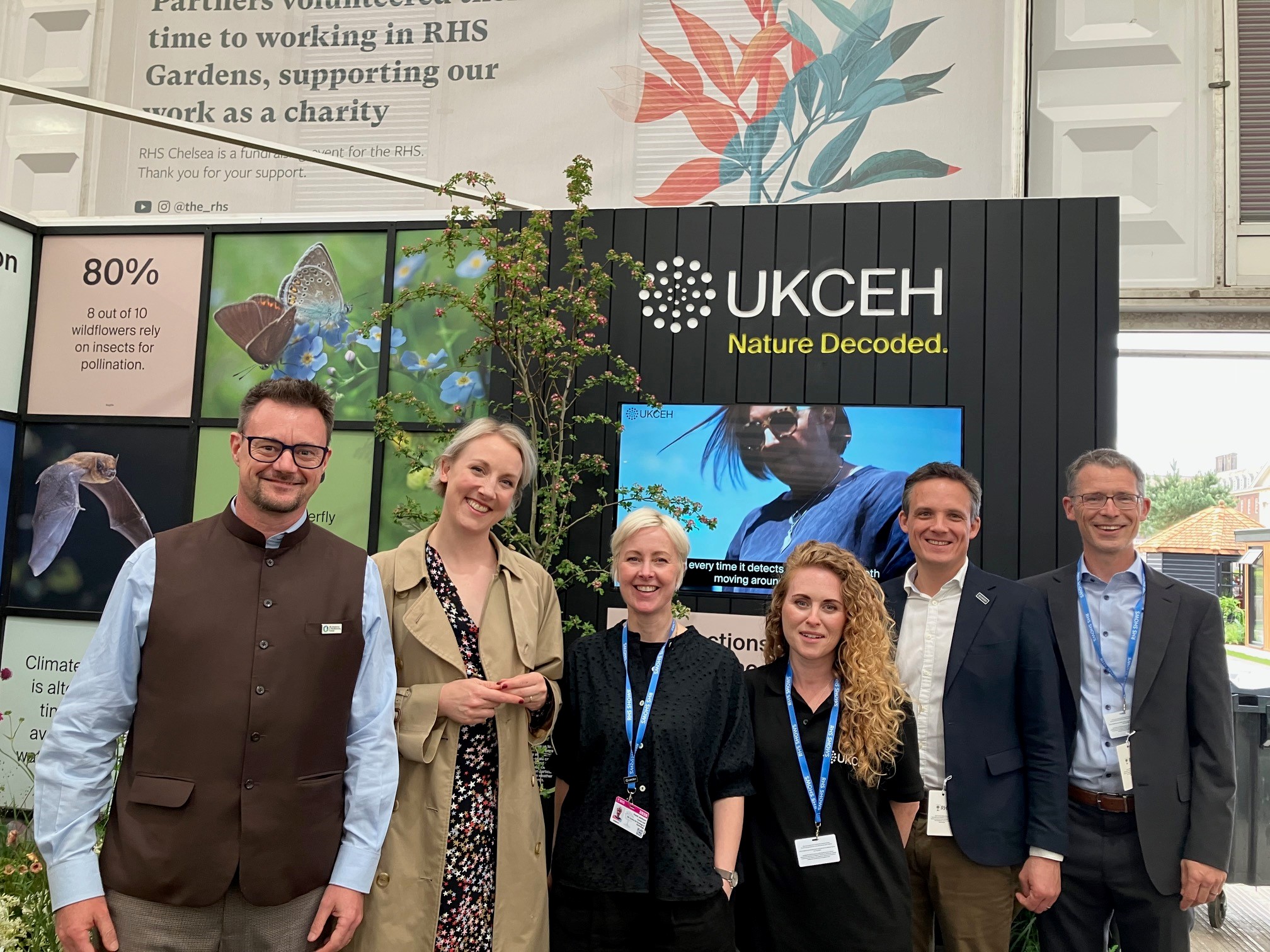
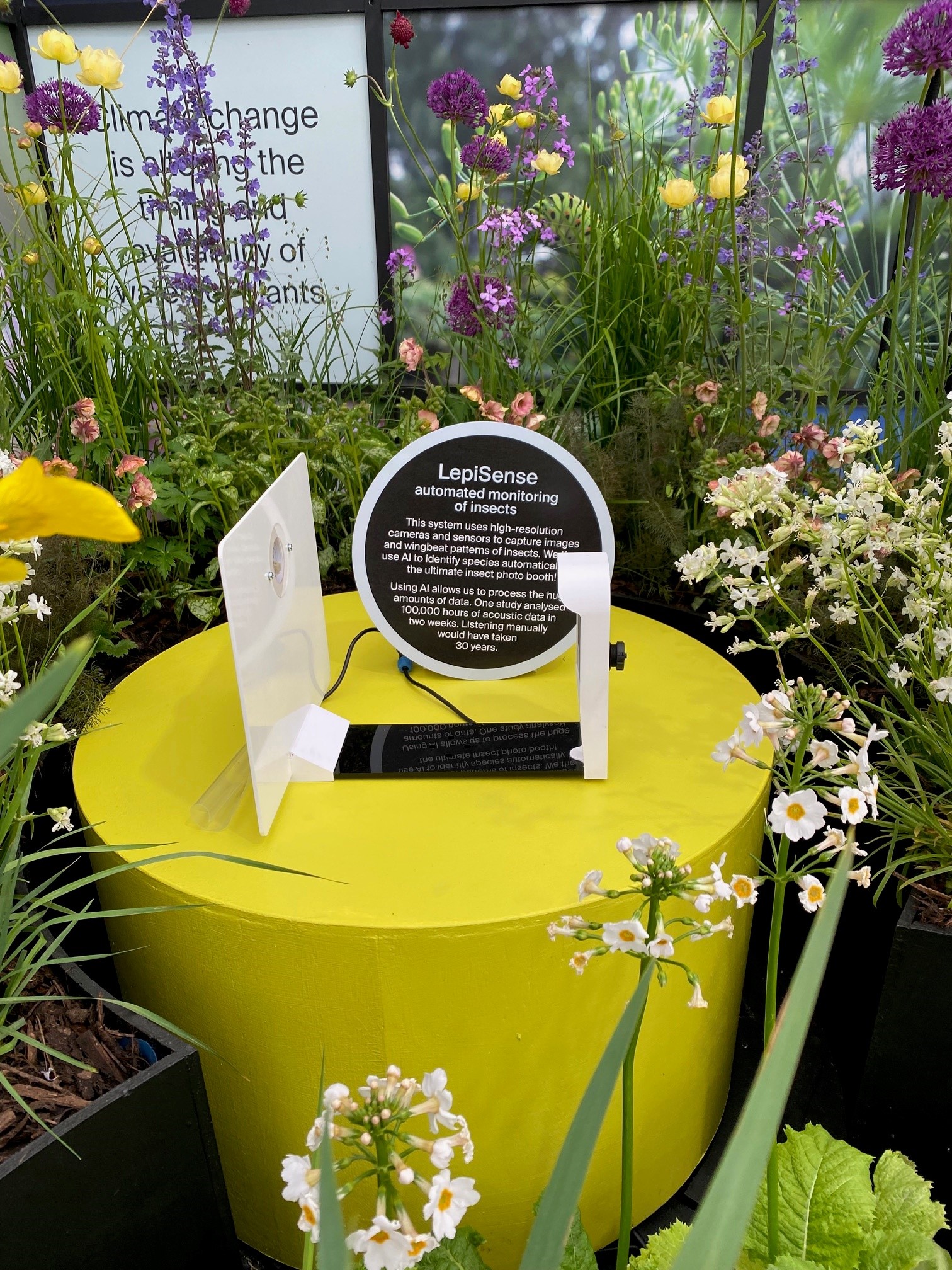
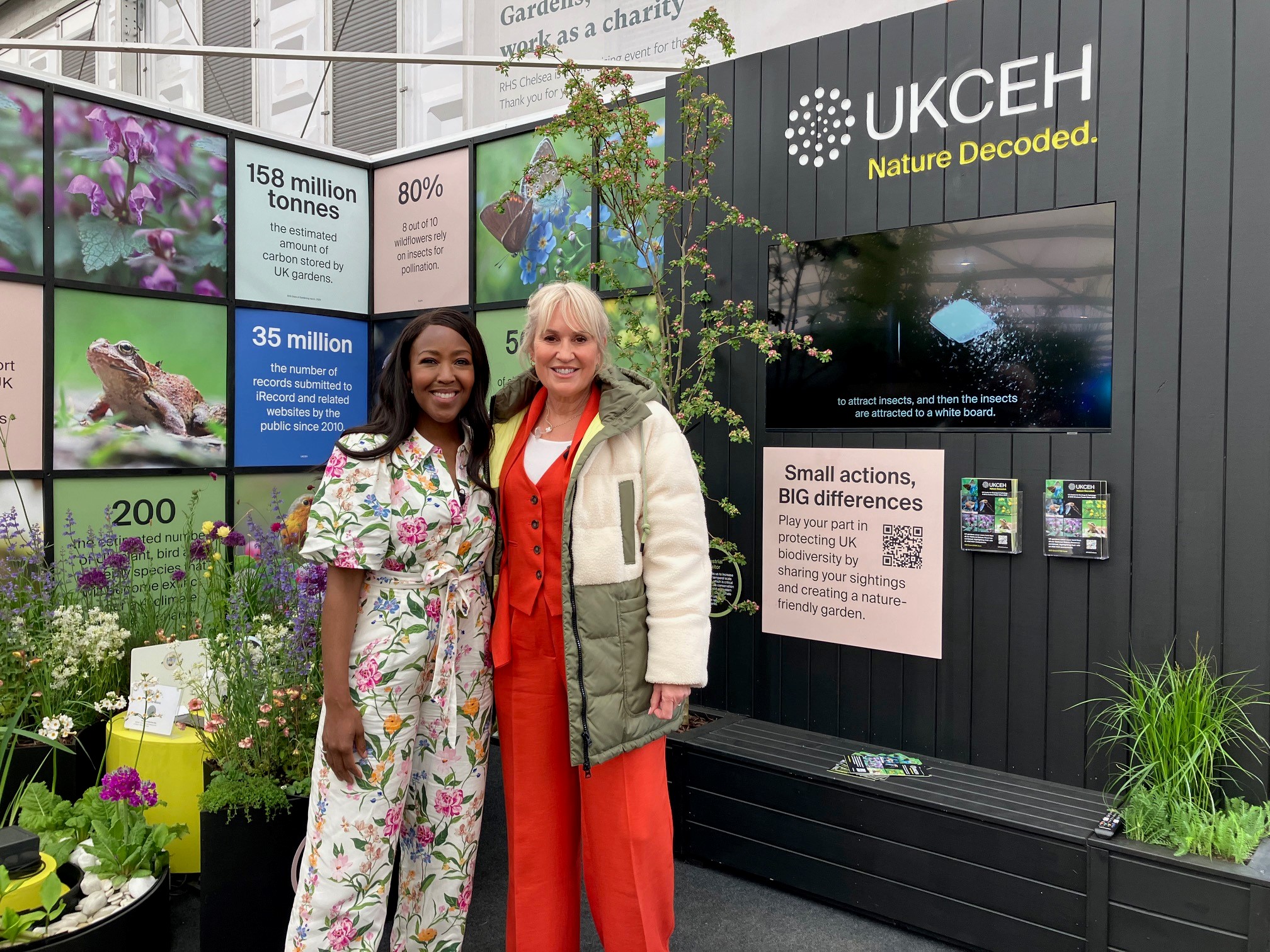
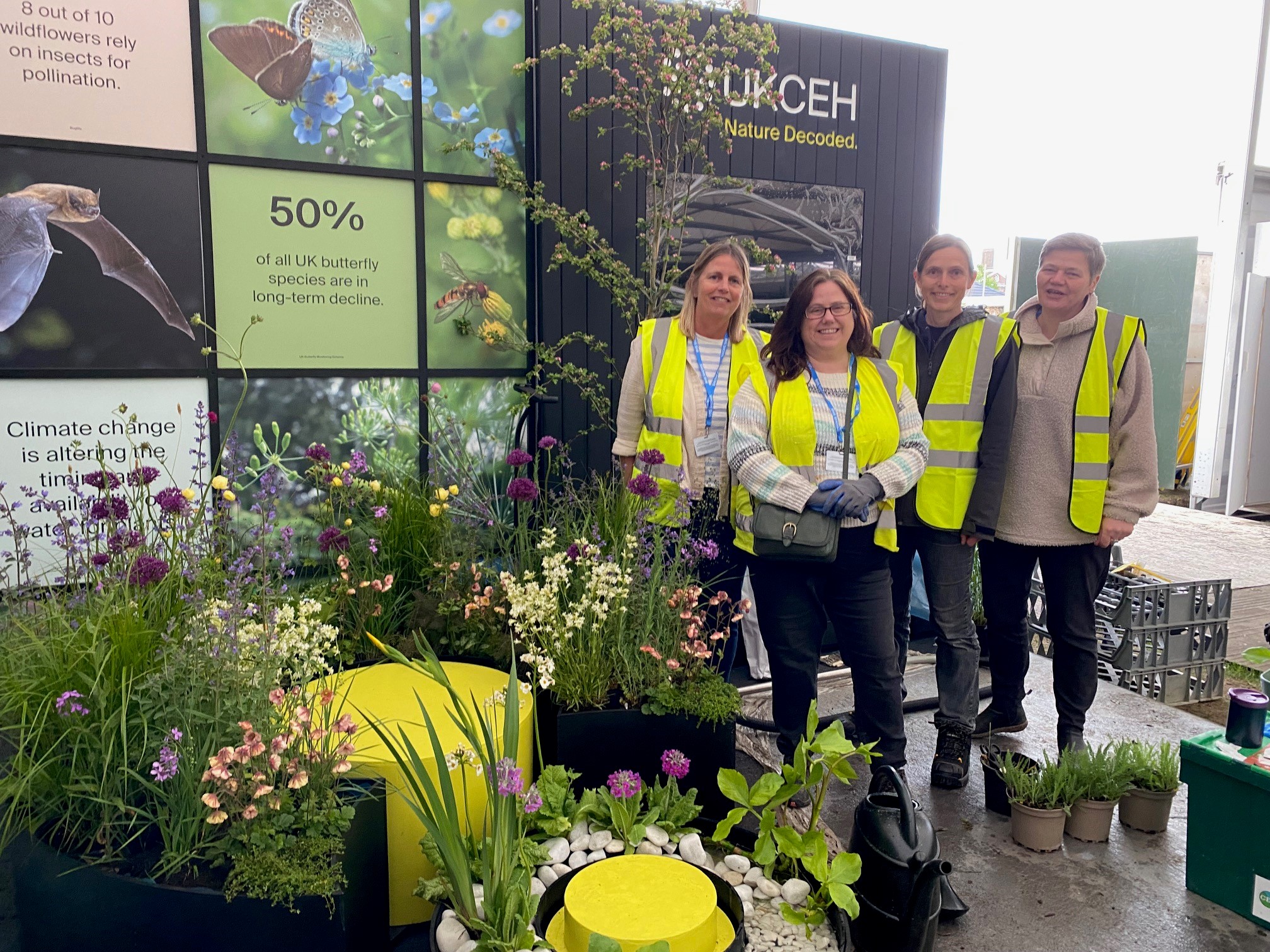
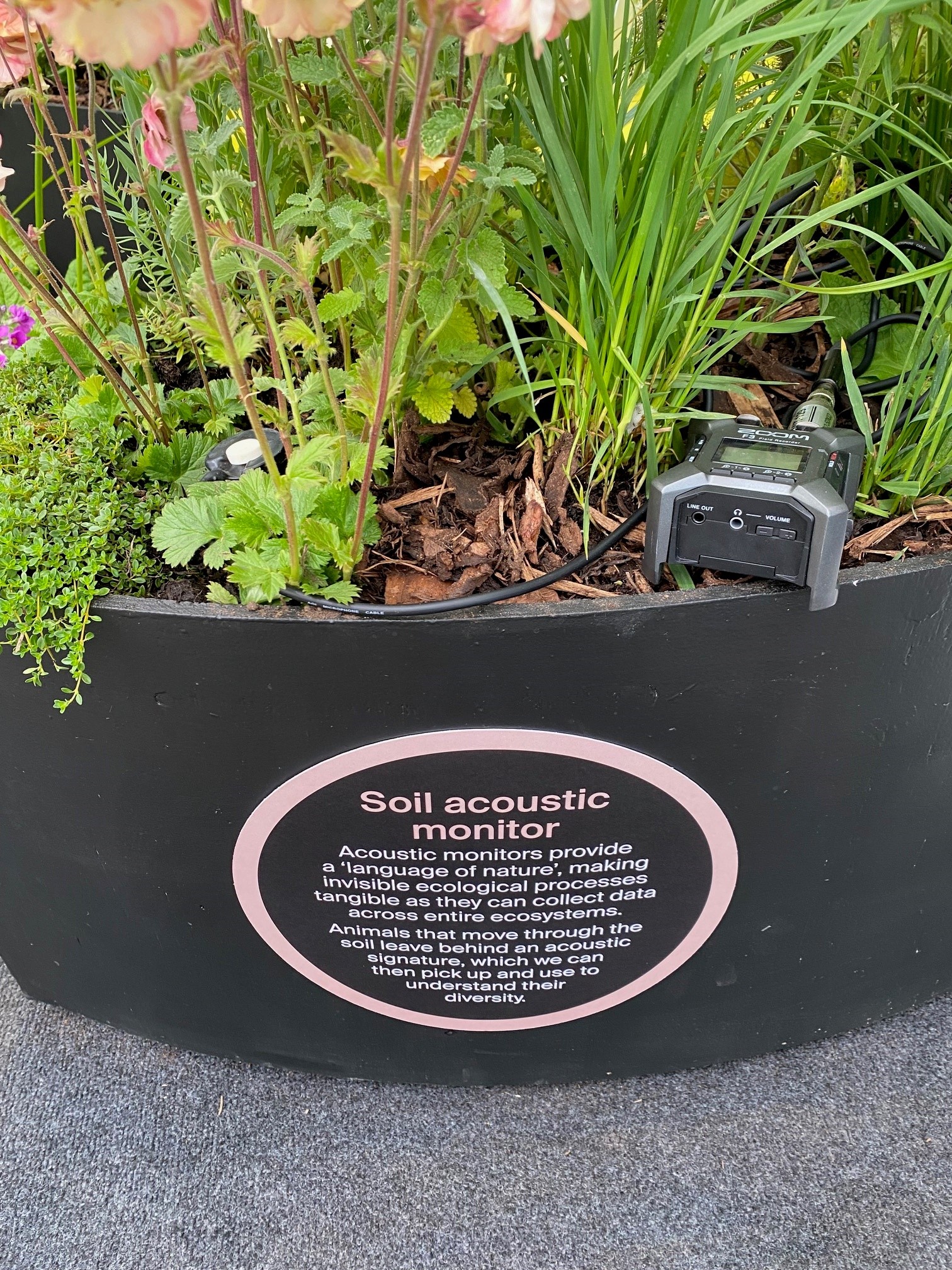
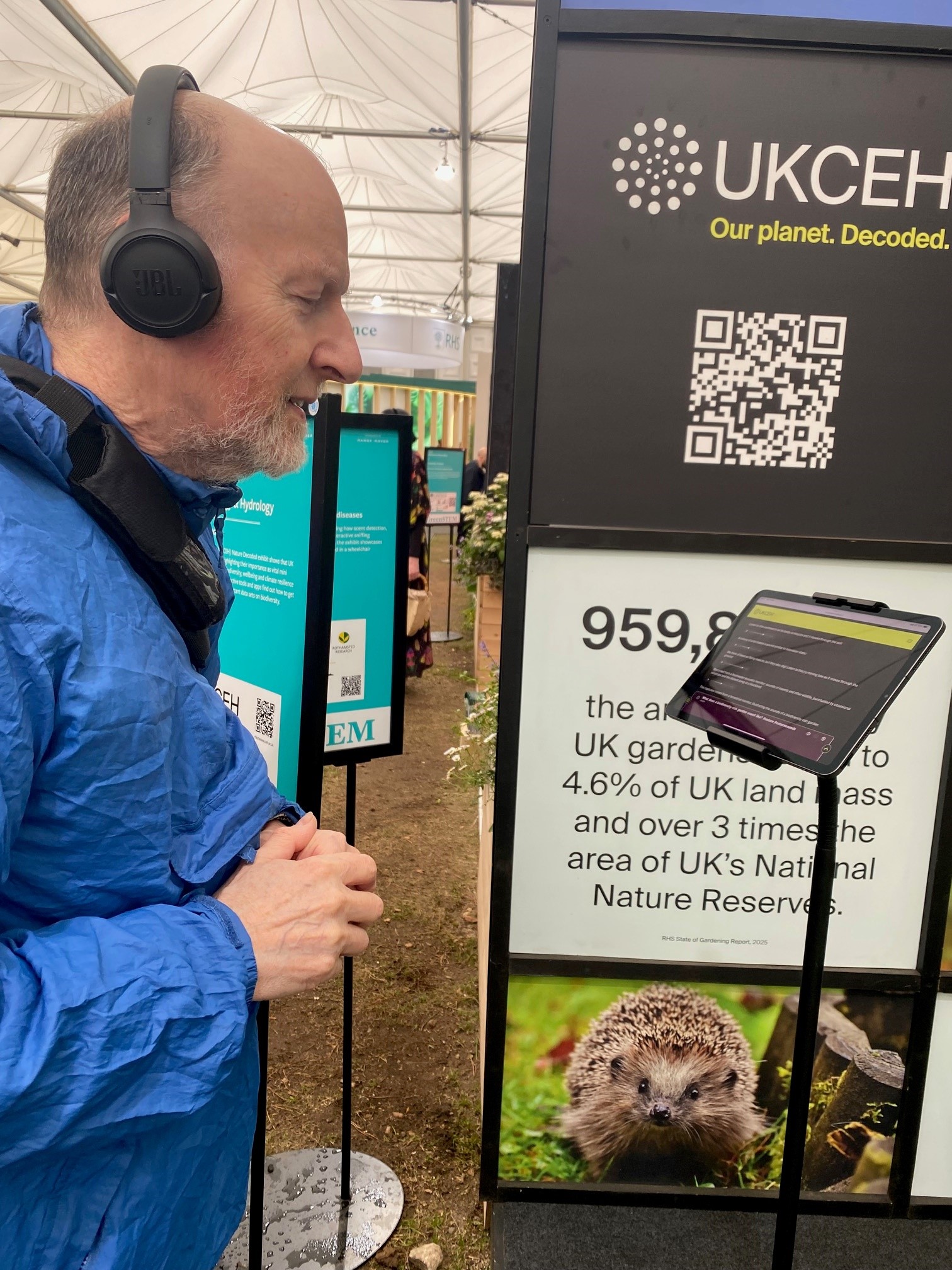
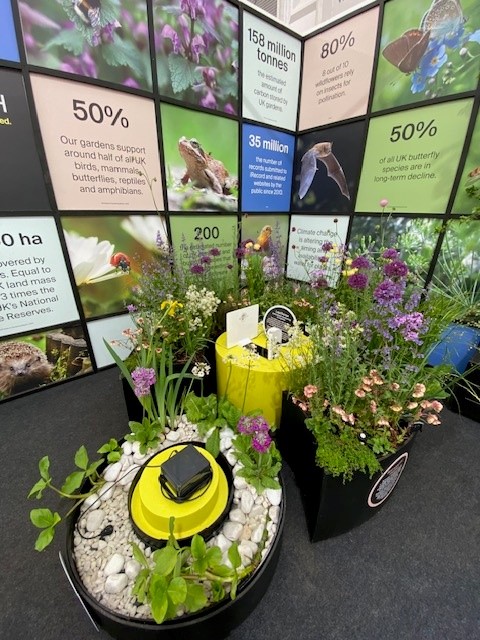
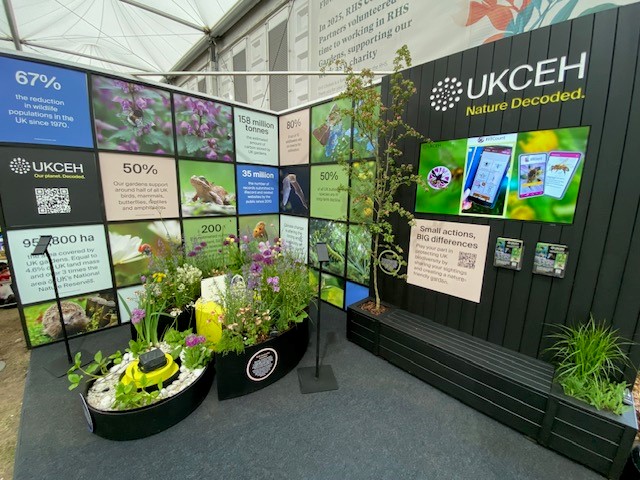
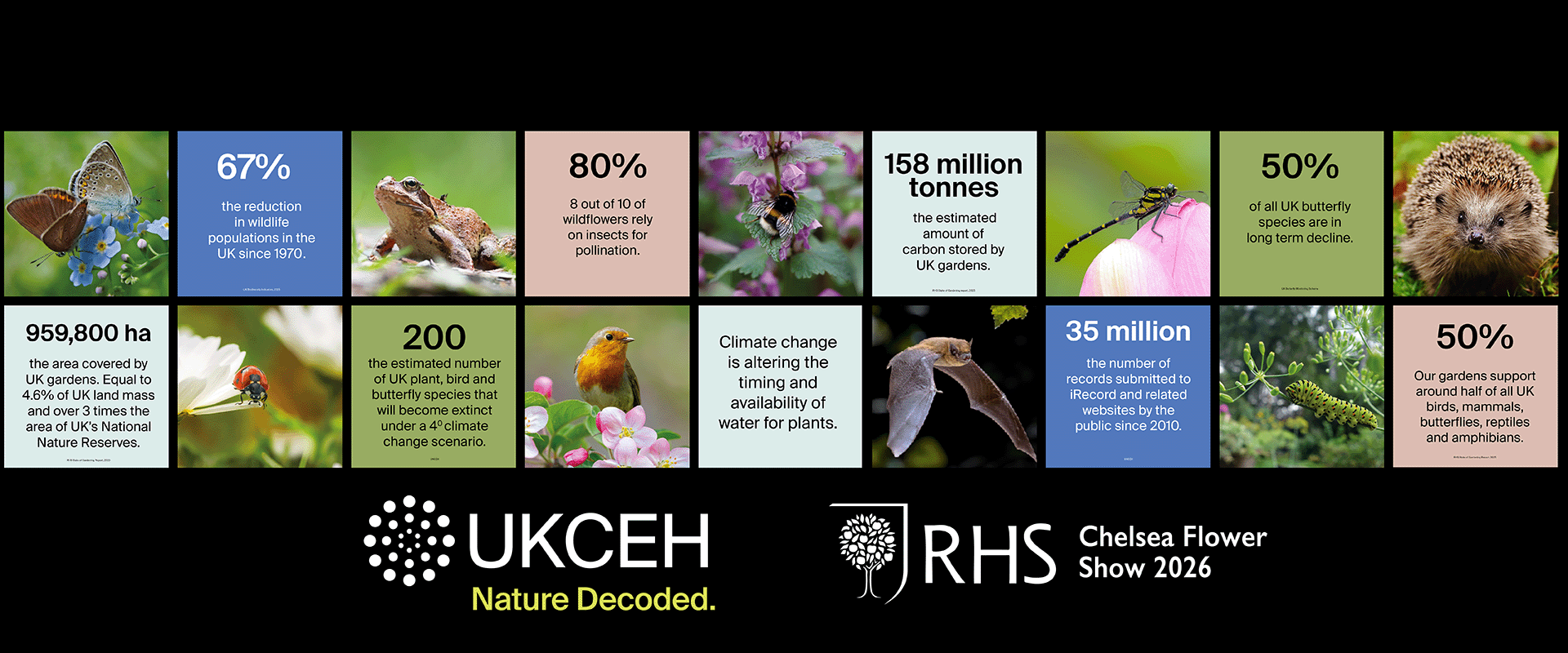
Our UKCEH Nature Decoded exhibit (in the GreenSTEM zone in the Great Pavilion) explored how gardens support biodiversity, wellbeing and climate resilience through UKCEH science and technology. It highlighted the tech used to monitor biodiversity, such as LepiSense, soil acoustic monitors, freshwater acoustic monitors and terrestrial acoustic monitors. Visitors were able to listen to soundscapes, including worms moving through the soil, and find out how to contribute to important datasets on biodiversity by recording wildlife in their gardens. We were delighted to be awarded a silver medal.
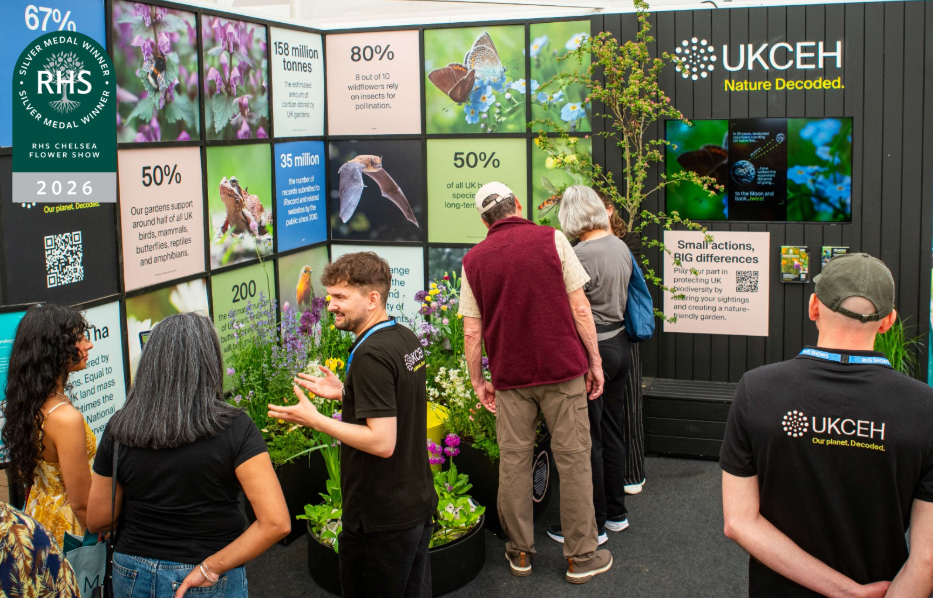
Small actions, BIG differences
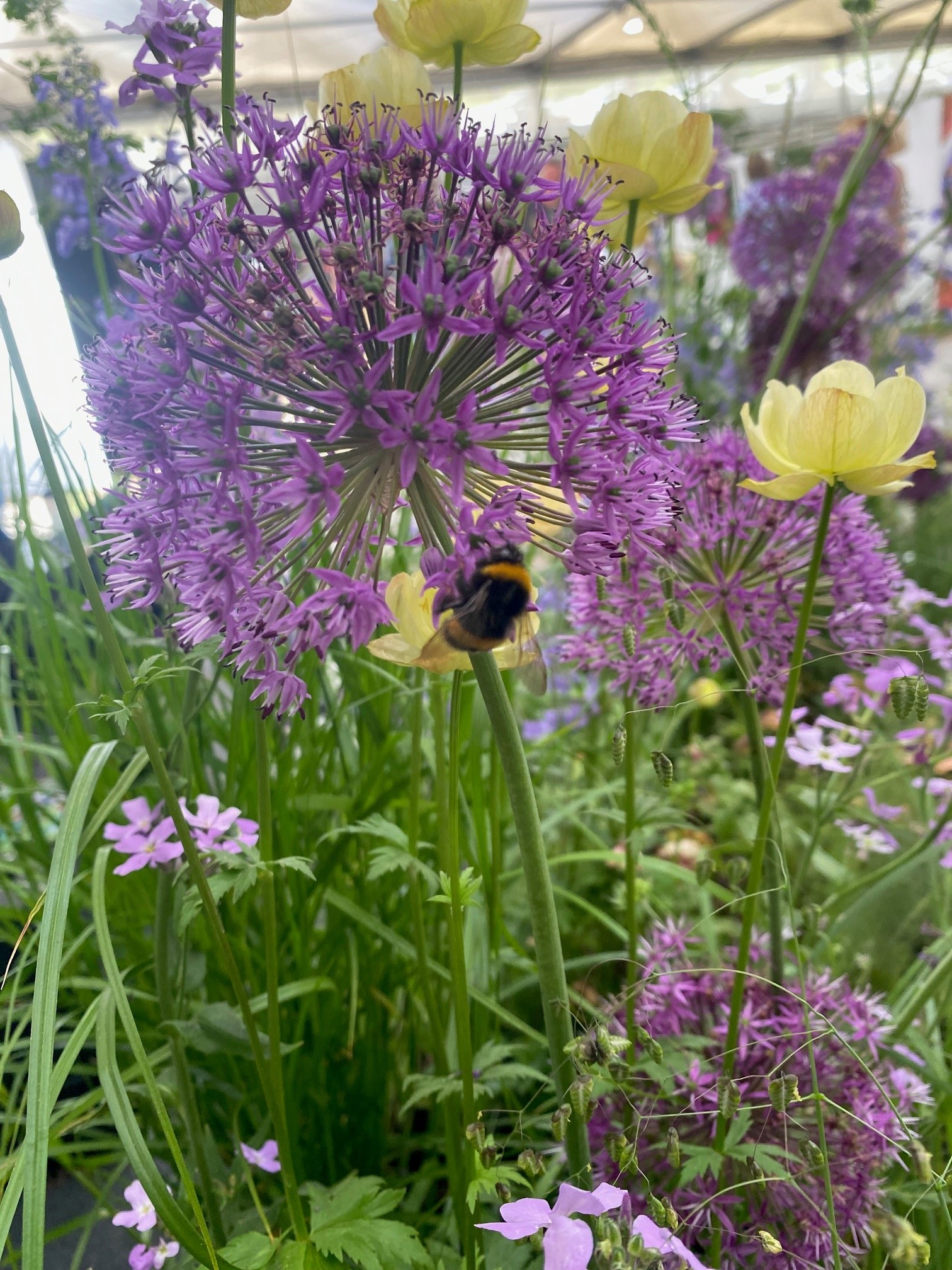
- Pollinator-friendly and drought-tolerant plants showcased in the exhibit demonstrate how you can support biodiversity in your garden.
- Simple steps like planting wildflowers, reducing pesticide use, or recording local species help reverse biodiversity loss.
- Did you know that soil organisms make noise, insect wingbeats are unique identifiers, and acoustic diversity is a measure of ecosystem health?
- Find out about how technology, from the hardware to the AI can be used to collect and interpret ecological data and create meaningful insights.
Planting list
Our exhibit showcases plants that are wildlife friendly and climate resilient, demonstrating that it is possible to have a garden that not only looks good but also provides a vital ecosystem for wildlife. Click here for the list of plants displayed on our exhibit.
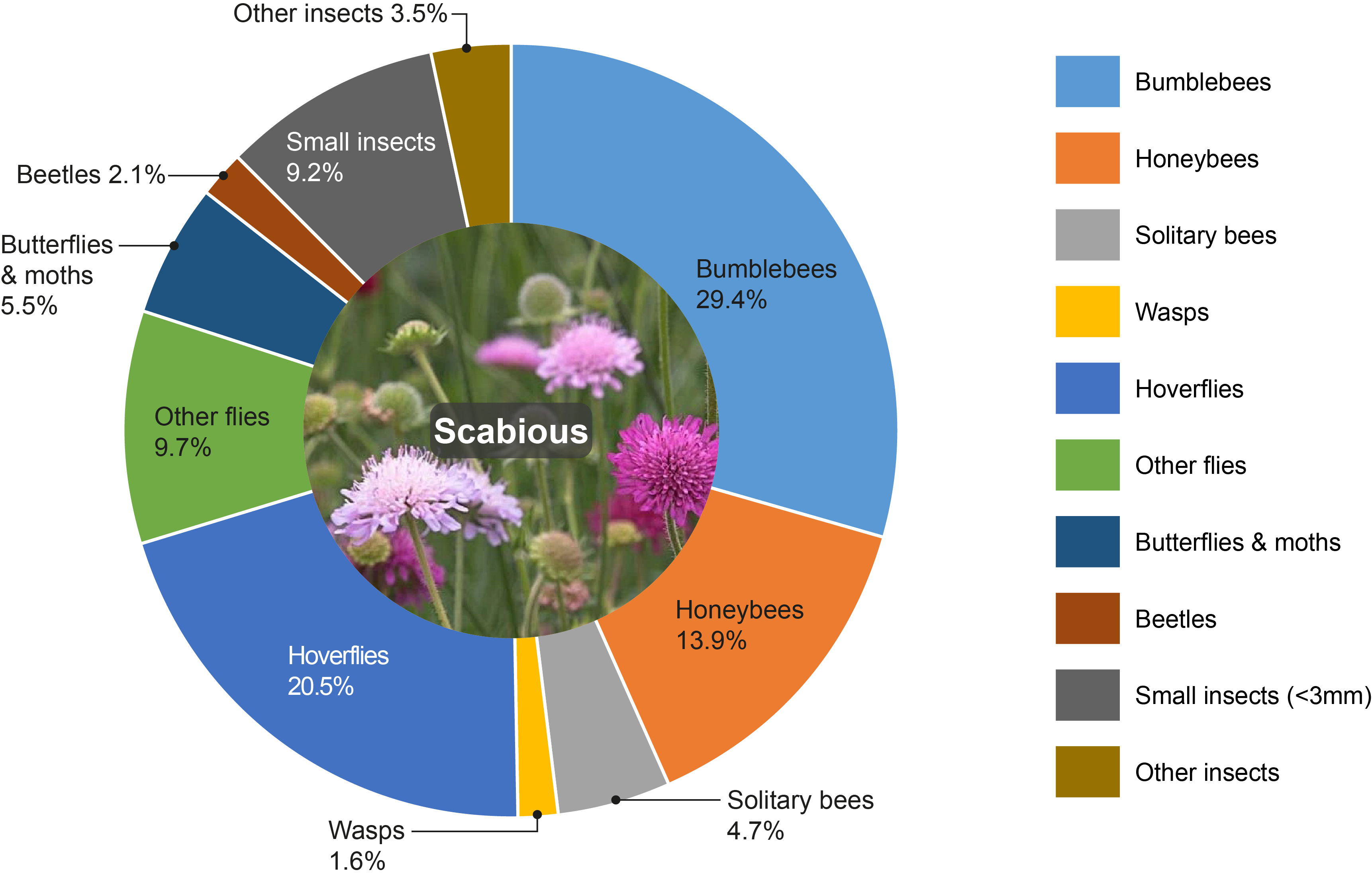
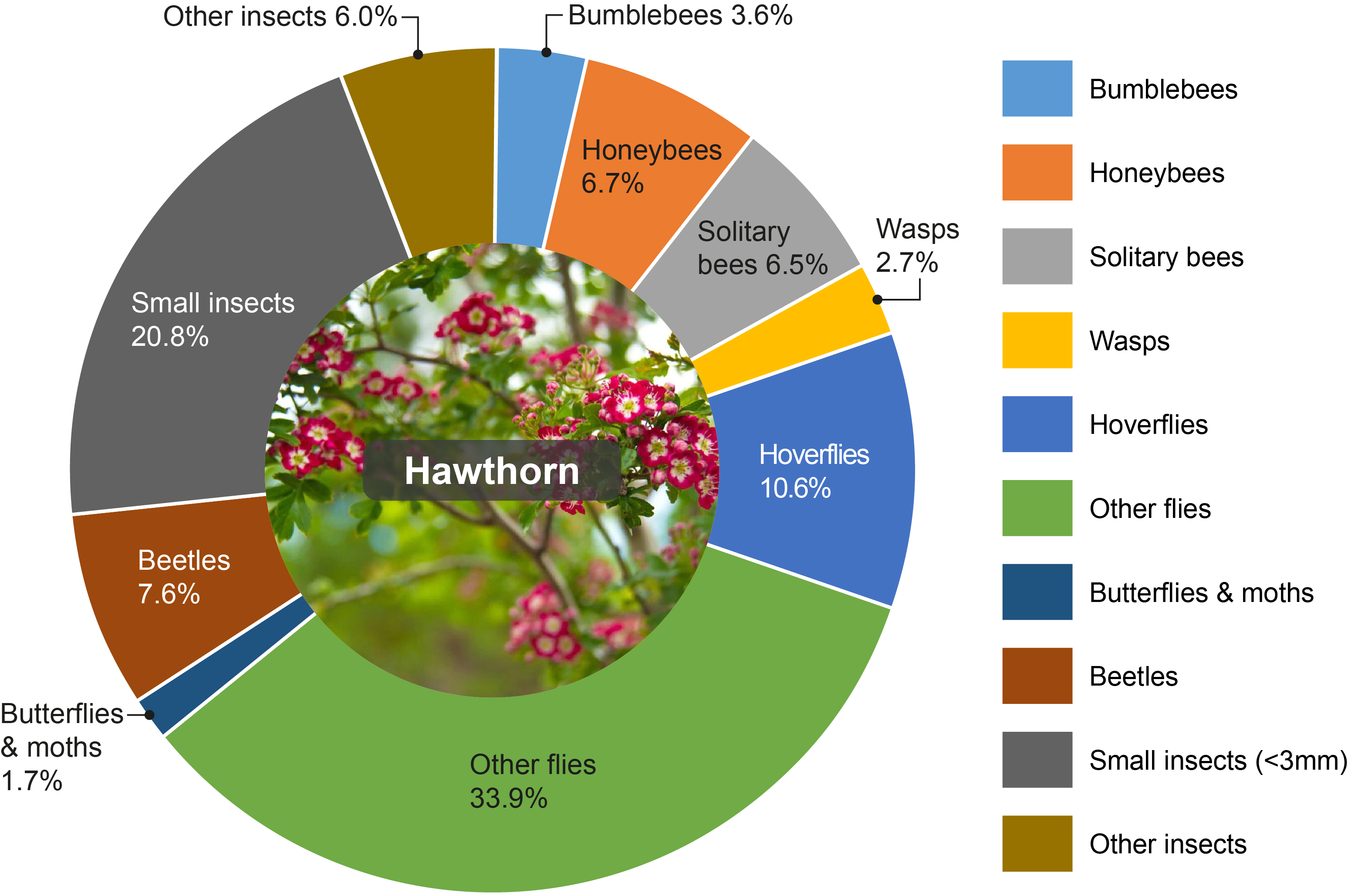
Here are a couple of examples, along with information from the UK Pollinator Monitoring Scheme showing the different sorts of insects attracted to the plants.
Knautia macedonica ‘Melton Pastels’
Drought-resistant with a long flowering season, this plant with its pincushion flowers is great for many different bumblebees, solitary bees and butterflies.
Crataegus laevigata ‘Crimson Cloud’
The fruits of this small native tree provide a food source for birds while its dense branches provide nesting sites and a safe haven for small mammals like hedgehogs.
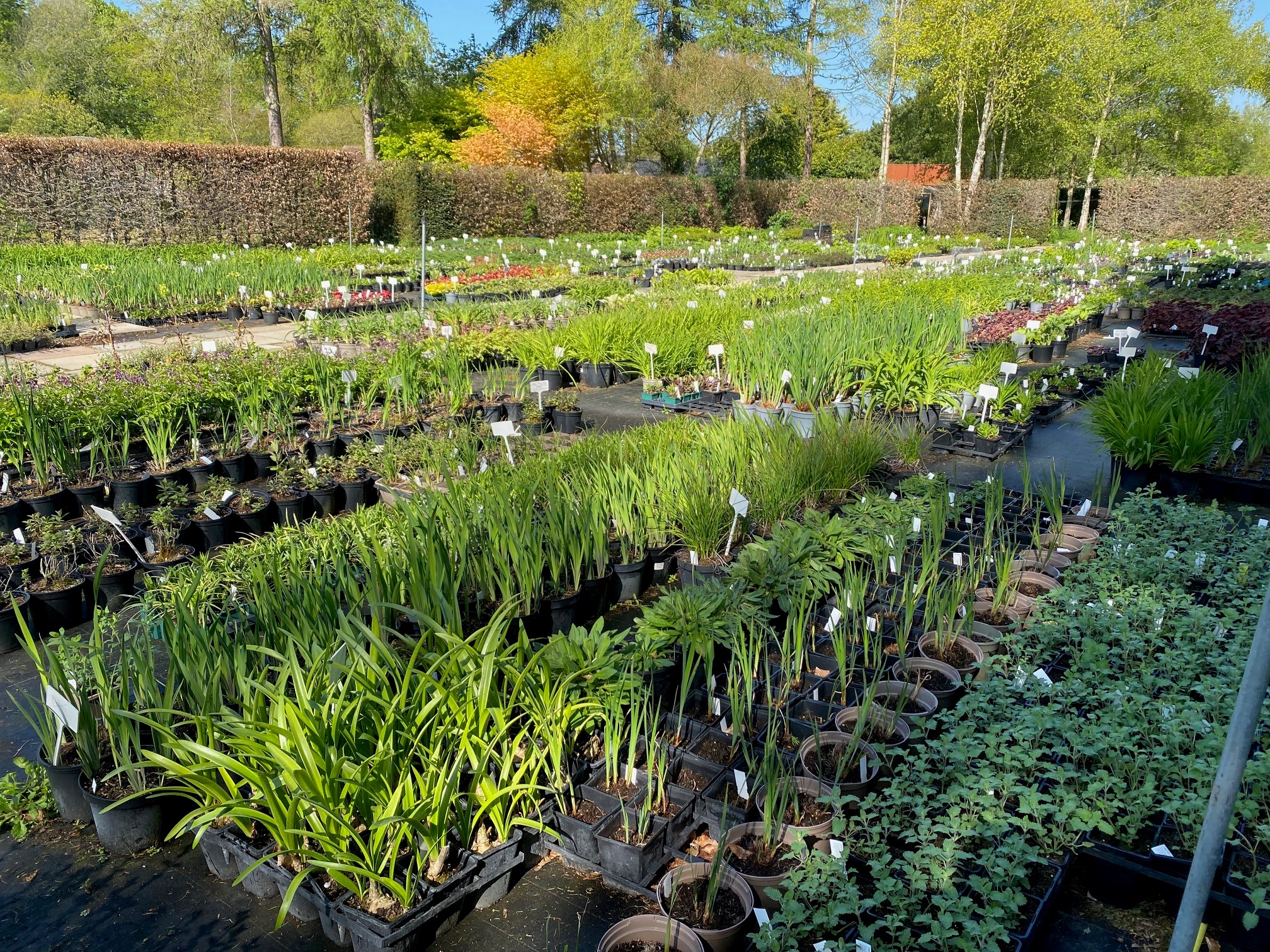
Plants for UKCEH Nature Decoded have been supplied by Oxfordshire nursery, Babylon Plants.
Get involved
Records collected by people like you for various projects and wildlife schemes are used by our scientists to further our understanding of the world around us, and by governments and charities to help restore nature. You can send in your observations via free smartphone apps or the web. We can all play our part.
Find out more here



Science is not the only beneficiary… taking part in nature-based ‘citizen science’ projects can boost our wellbeing and connection to nature. Read more here.
A secret symphony
Beneath our feet and in our flowerbeds, there’s a whole host of animals creating tiny sounds that are often too quiet for human ears to pick up. By deploying bioacoustic sensors into the soil, we can tune in to this secret symphony and discover what is living in the earth, helping us better understand these hidden ecosystems. Listen to a few different species you’d commonly find in your garden,
Some beetles, and in some cases even their larvae, make sounds by rubbing their body parts together, known as stridulation.
Listen to this earthworm as its body contracts and it moves through the soil:
A colony of ants makes a sound similar to television static:
We think of bees as flying insects, but they also dig! Listen to this ivy mining bee as it moves through the ground:
Recorded from a freshwater acoustic monitor: sounds of insects and other wildlife, punctuated by occasional raindrops and the distant song of a blackbird.
This captures noises from a terrestrial monitor, illustrating the sounds of a biodiversity rich garden.
Working in partnership
UKCEH is working with the Aberdeen Group Charitable Trust on Project INSPIRE in the UK, Costa Rica and Singapore.
Using AI-assisted biodiversity monitoring, this project will generate vital data for conservation, climate resilience and public engagement.
UKCEH is working with the National Garden Scheme on the Big British Garden Survey. This project aims to celebrate the role that gardens play in providing space and resources for wildlife. Find out more at ngs.org.uk
About UKCEH
UKCEH is a leading independent research institute with over 600 scientists studying how the natural world works. We work across land, water and air, because the environment is connected and we study it that way.
We aim to understand environmental systems and use that knowledge to build resilience for people and the planet.
Visit our main website